-

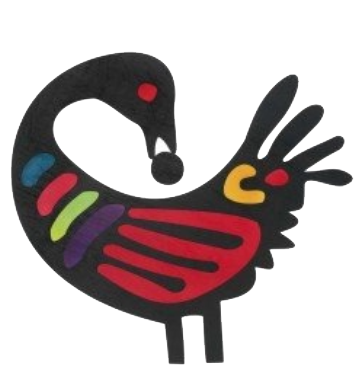
Nkyinkyim
is an Akan word that literally means “twisting.” It is a symbol for the tortuous nature of life’s journey and, also, the toughness, versatility, and dynamism required to thrive in it. Willis notes that it is also a symbol of dedication to service.
Akan history
Read more: Ghana 2026
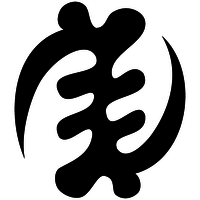
Gye Nyame
is an Akan expression that literally means “Except God.” It expresses the omnipotence and supremacy of God in all affairs.
Gye Nyame is arguably the most popular Adinkra symbol. It expresses the deep faith the Akans have in the Supreme Being, called by many names and titles including Onyame (Nyame), Onyankopɔn, Twereduampɔn (the reliable one), and many others.
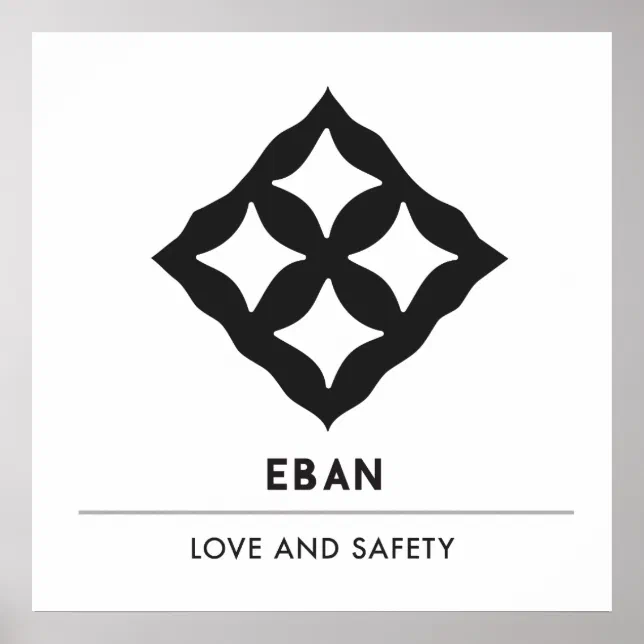
EBAN “fence”
Symbol of love, safety and security The home to the Akan is a special place. A home which has a fence around it is considered to be an ideal residence.
The fence symbolically separates and secures the family from the outside. Because of the security and the protection that a fence affords, the symbol is also associated with the security and safety one finds in love.
Gye Nyame mugs

Nea Onnim
He who does not know; from the proverb, “When he who does not know learns, he gets to know.” It is a symbol of knowledge, life-long education, and continued quest for knowledge.
Writing Pillars
Every Name Has a Story. Every Story Has a Legacy
One of the most meaningful experiences of my Ghana Study Abroad program was visiting the Kwame Nkrumah Memorial Park in Accra. The site not only commemorates Ghana’s first president and leader of the independence movement, but also serves as a physical reminder of the connections between Africa, African Americans, and the broader African diaspora. During the visit, references were made to Martin Luther King Jr., Malcolm X, Maya Angelou, Muhammad Ali, and W.E.B. Du Bois, all of whom maintained significant relationships with Ghana and with the vision of Pan-African unity. These themes closely connect with concepts explored in African American Studies and provide an important framework for understanding my documentary project, All You Have in Life… Is Your Name.
Another source of joy was my research project and documentary series, “The Only Thing You Have in Life Is Your Name.”
For years, I have been researching my family history, tracing my roots from my ancestor Isaac Sermons Sr. in North Carolina and asking questions about the journey that connects my family to Africa. Visiting Ghana allowed me to add a new chapter to that story. It was more than academic research. It was personal.
For heritage, myth, and the stories that endure.
Nana Kodwo Mbrah (most commonly referring to Osabarimba Kodwo Mbrah V) was a revered paramount chief (Omanhen) of the Oguaa Traditional Area in Cape Coast, Ghana. Enstooled in 1948, his 48-year reign is celebrated for maintaining peace, establishing local educational institutions, and reviving the Oguaa Fetu Afahye festival.
For most of my life, I knew myself as Barry Sermons, a descendant of people whose names survived slavery, migration, and generations of change.
In Elmina, Ghana, during an Atonement and Naming Ceremony, I was given a Ghanian name: Nana Kodwo Mbrah.
The name was not chosen at random. It connected me to the legacy of Osabarimba Nana Kodwo Mbrah V, the revered Paramount Chief of Cape Coast whose leadership spanned nearly half a century. He was remembered as a builder, a peacemaker, and a guardian of culture.
The elders explained that a name is both a gift and a responsibility. It carries expectations. It connects the living to those who came before.
In that moment, the journey ceased to be only about discovering where my ancestors came from. It became a question of what I would do with the legacy I inherited.
I arrived in Ghana as Barry Sermons.
I left Ghana carrying the name Nana Kodwo Mbrah.
For speculation, vision-making, and Afrofuturist thought.
Future Imagined is where possibility takes form.
It invites writers and thinkers to explore alternative worlds, reinterpret the present through speculative lenses, and consider futures shaped by justice, creativity, and cultural continuity.
Grounded in Afrofuturist philosophy, this pillar embraces non-linear time, visionary design, and re-enchantment — opening pathways to futures that expand, rather than constrain, human potential.
For power, ethics, and the structures we build.
Human Systems looks at the frameworks — political, technological, social, and economic — that influence daily life and collective futures.
It examines how new technologies challenge old assumptions, how governance adapts to rapid change, and how communities resist or reshape structures that no longer serve them.
This pillar encourages a critical yet imaginative view of progress: not as inevitable, but as a system humans actively design.
For cities, movement, and the geographies of belonging.
Urban Cosmos views cities as dynamic ecosystems shaped by culture, migration, infrastructure, and aspiration.
It explores how urban spaces carry memory, how diasporic communities create belonging across distance, and how Afrofuturist ideas can inspire new forms of architecture, mobility, and communal life.
This pillar treats the city as both a physical place and an imaginative realm — where new futures are continuously rehearsed.
For short reflections, emerging ideas, and cultural pulses.
Signals captures the quick movements of the world — brief insights, news fragments, experiments, innovations, and cultural shifts.
It functions as Sankofa’s “early-warning system,” gathering the small sparks that often precede larger transformations.
This pillar is agile, observational, and continuously updating, offering a living snapshot of the ideas shaping life on Earth and beyond.